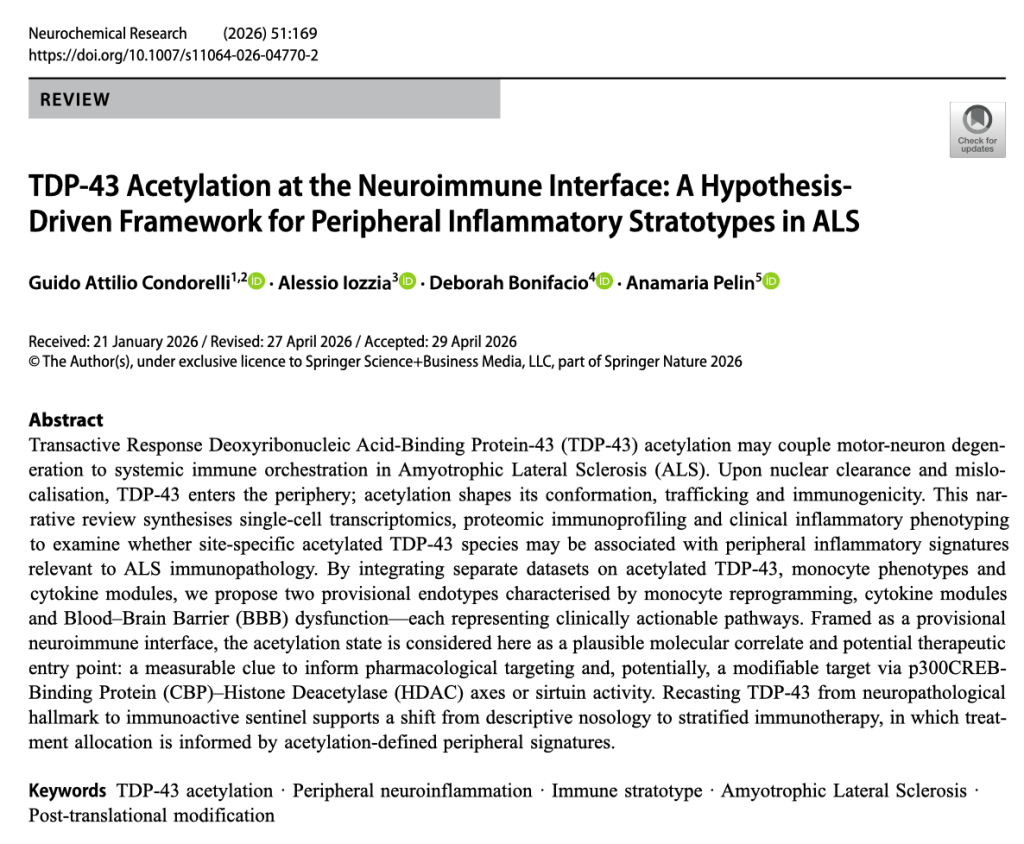
TDP-43 Acetylation at the Neuroimmune Interface: A Hypothesis-Driven Framework for Peripheral Inflammatory Stratotypes in ALS
Pharmaceutical Management Company (PMC) ltd. is pleased to share the publication of a new scientific article in the international Journal Neurochemical Research.
The review explores an emerging and highly relevant topic in neurodegenerative research: the potential role of acetylated TDP-43 as a molecular interface between neurodegeneration and peripheral immune dysregulation in Amyotrophic Lateral Sclerosis (ALS).
The article proposes a hypothesis-driven framework in which specific acetylation states of TDP-43 may be associated with distinct inflammatory and immunological profiles (“immune stratotypes”), potentially contributing to:
- peripheral neuroinflammation
- monocyte reprogramming
- cytokine signalling alterations
- Blood–Brain Barrier dysfunction
- extracellular vesicle-mediated immune communication
By integrating evidence from molecular biology, immunology, transcriptomics and translational neuroscience, the publication discusses how TDP-43 acetylation could become relevant for:
- biomarker discovery
- patient stratification in clinical trials
- precision medicine approaches in ALS
- development of targeted immunomodulatory therapies
The review also analyses the translational implications of pathways involving p300/CBP, HDAC modulation and SIRT1-mediated deacetylation, highlighting future perspectives for pharmacological intervention and biomarker-guided therapeutic strategies.
This publication reflects PMC’s continued commitment to scientific innovation, translational research and multidisciplinary collaboration in the medical-pharmaceutical field.
Citation
Condorelli, G.A., Iozzia, A., Bonifacio, D. et al. TDP-43 Acetylation at the Neuroimmune Interface: A Hypothesis-Driven Framework for Peripheral Inflammatory Stratotypes in ALS. Neurochem Res 51, 169 (2026). https://doi.org/10.1007/s11064-026-04770-2